
So like for this holiday, I visited Guam, a U.S. territory, and I noticed that the history of Guam connected to our class stuff about colonialism and identity. The natives of Guam are known as the Chamorro people first fell under Spanish rule in the 17th century. Then, following the Spanish-American War, Guam was ceded to the United States in 1898.
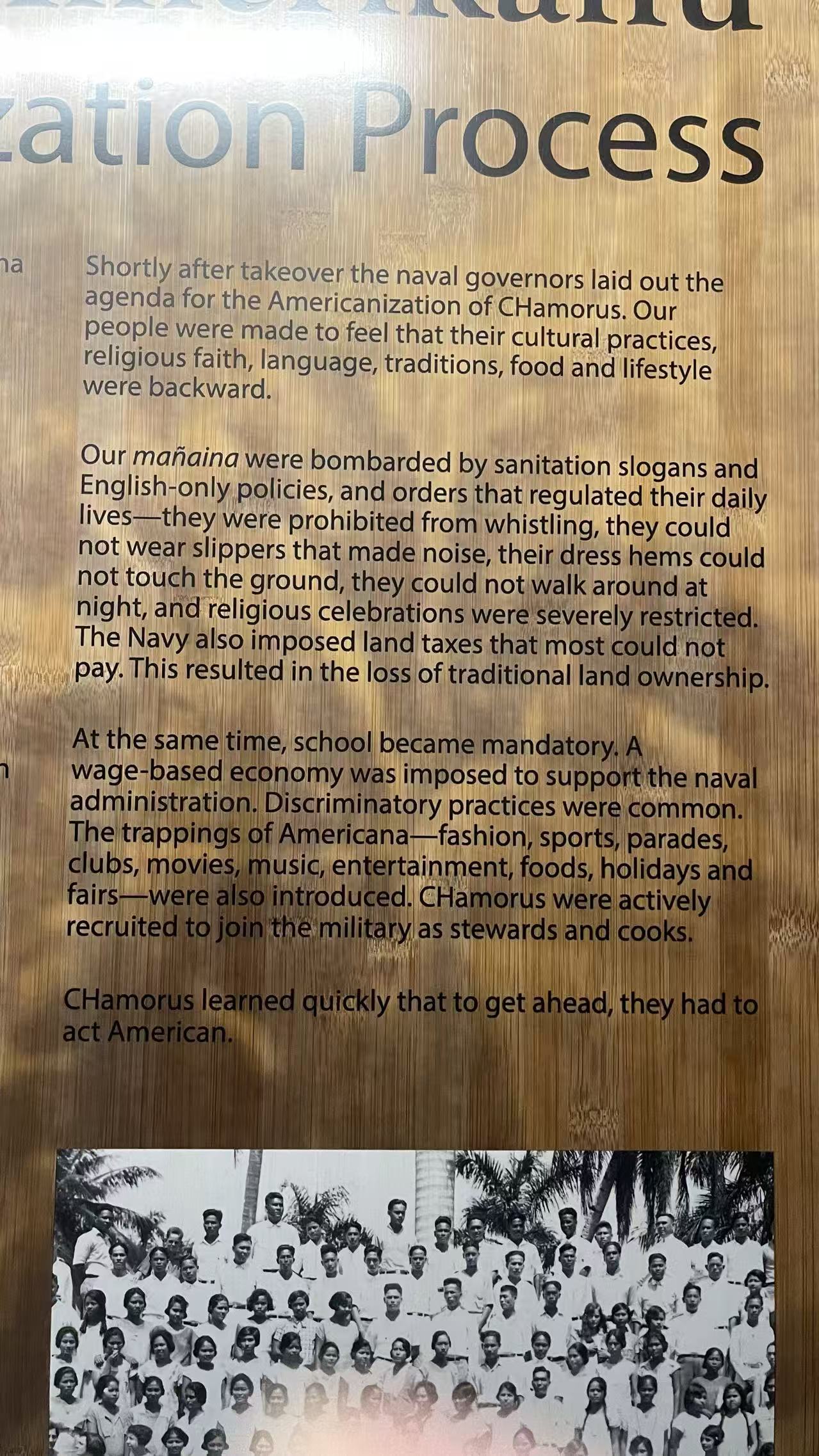
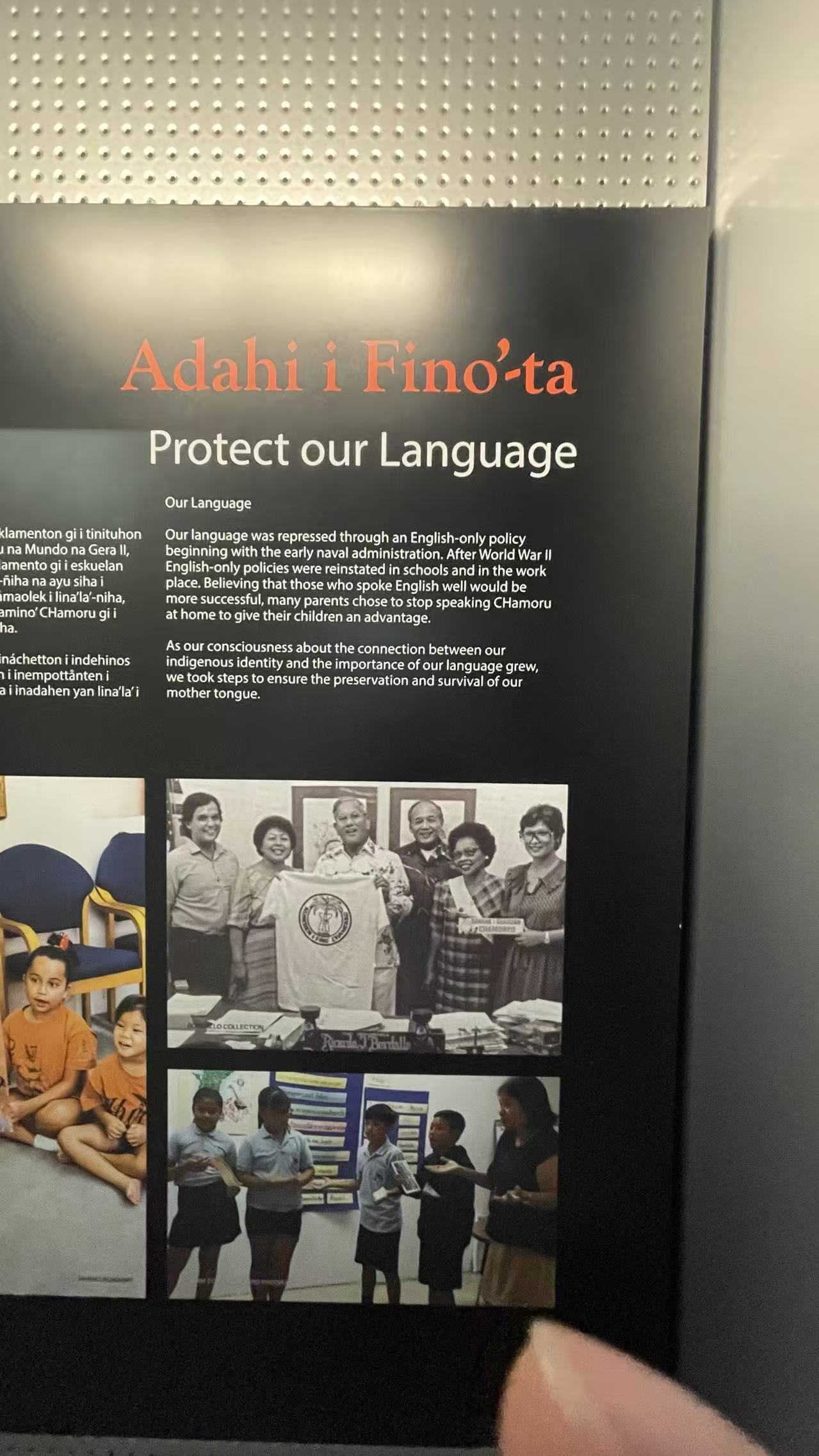
The museum exhibits highlighted America’s effort to “Americanize” the island, primarily through language. As the first picture notes, “The Chamorros learned quickly they had to act American.” The U.S. mandated an English-only policy, demonstrating how colonizers suppress native identity. This mirrors our study of The Tempest: just as language became a tool of power for Prospero over Caliban, English was seen by many Chamorros as the key to success, leading families to prioritize it. As shown in the line “The Chamoros quickly learned they had to act American”.
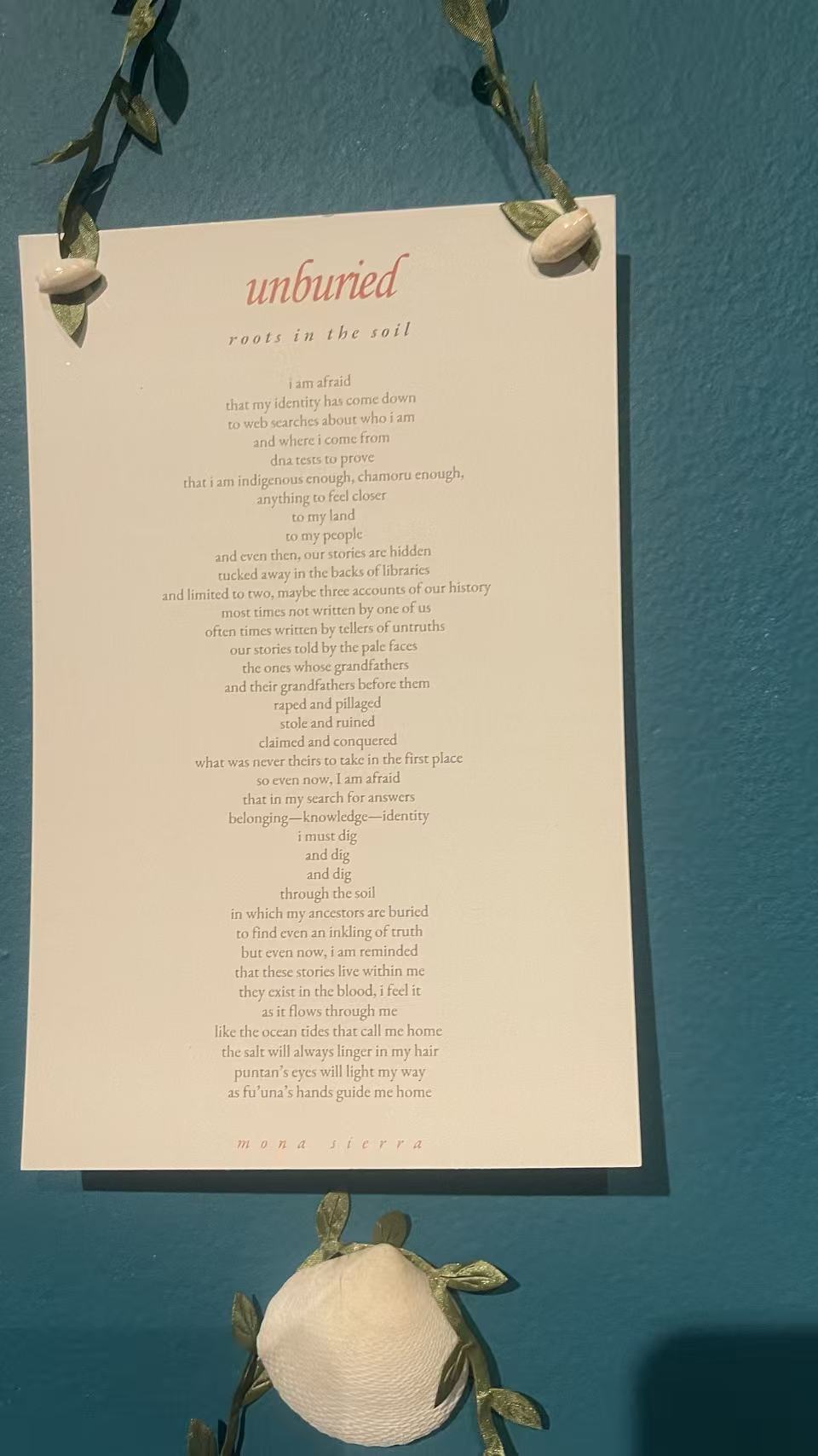
One poem in the museum was really interesting capturing the modern legacy of this erasure. The author describes their identity being reduced to “web searches” or DNA tests, their culture made to feel “unimportant” and forgotten. The poem framed colonialism as an unfair “taking of what was never theirs in the first place”—a sentiment that directly echoes Caliban’s perspective. In both cases, the colonizer views their actions as a civilizing gift, while the colonized experience it as a forcible disruption of their peaceful existence, highlighting the fundamental conflict between the two. The exhibits showed that while the Chamoros learned that they had to act American, deep inside they there culture still resides in them. As shown in the line “these stories linger within me”. However, the colonialism destroyed there written culuture. A pattern that happens again and again, in colonialism.
It is very good, though arguably this is worse than what prospero did to caliban because caliban was happy about it at first and prospero didnt try to discriminate against him
Oh yes, back on the green flag trajectory! It’s really good to see you connecting the theme we studied in class to real world experiences 👍👍
I noticed an interesting feature: The museum labels you’ve shared capitalise the first two letters of CHamoru, but the poem uses no capital letters at all. I wonder what the significance of that is 🤔
I think I’ll add this post to our grade 8 unit 2 reading next year; thanks for sharing 👍👍
So I did some research on this matter, and I found for much of history, “CHamoru” was spelled “Chamoru”. However, in the CHamoru language, “Ch” is one distinct unit in the alphabet. Due to this, the goverment of Guam and cultural advocates have recently promoted the spelling “CHamoru” to preserve the linguistic integrity of their language. However, in common usage, the native language and people are still known without the second capitol letter. Which is most likely why the poem used no capital letters, to show how even the name and language of the people are spelled wrong.
Excellent work! Remind me to award a green flag when we return to class 👍